
Basal Cell Carcinoma Treatment in Auburn and Rocklin, CA
Dermatology Offices in Rocklin CA and Auburn CA
Call the Location Near You:
Rocklin: 916-938-2531
Auburn: 916-938-2532
A spot that bleeds, scabs over, and then bleeds again a few weeks later is worth a second look. Halo Skin Institute diagnoses and removes basal cell skin cancer usually with a same-day appointment when something looks urgent. The reassuring part tends to come early in these conversations: caught in time, this is one of the most curable cancers there is.
Call the location nearest you:
Rocklin: 916-938-2531
Auburn: 916-938-2532
Basal Cell Carcinoma Treatment
What Is Basal Cell Carcinoma?
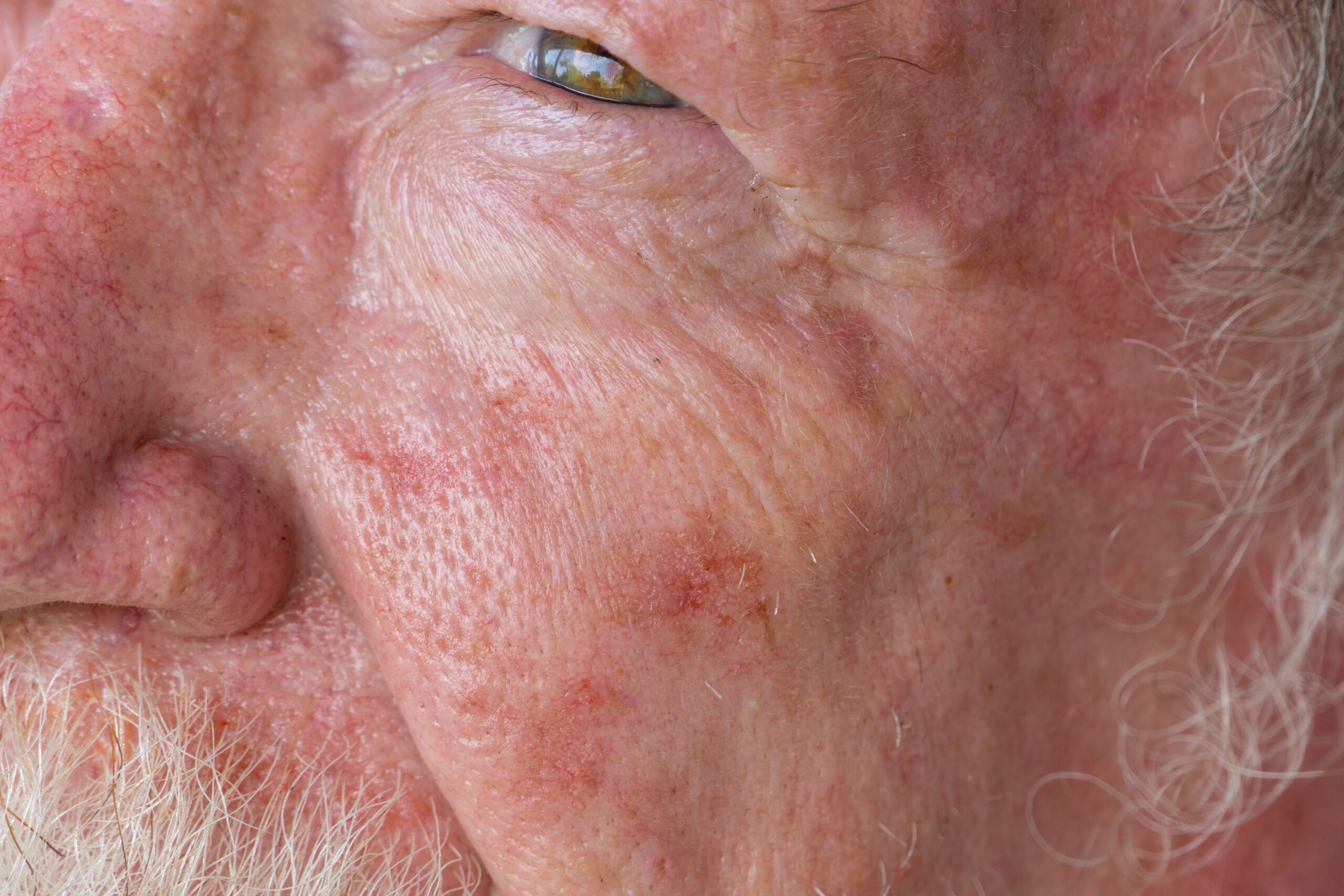
Basal cell carcinoma is the most common skin cancer in the world, and it begins in the basal cells that sit at the bottom of your outermost layer of skin. It grows slowly, stays where it started in the overwhelming majority of cases, and almost never travels to other organs. That slow pace is exactly why it is so treatable, and also why it slips past people. A lesion can sit on an ear or the side of a nose for a year, changing so gradually that you stop registering the change at all. Roughly eight out of ten non-melanoma skin cancer diagnoses are this type.
What Does a Basal Cell Skin Cancer Look Like?
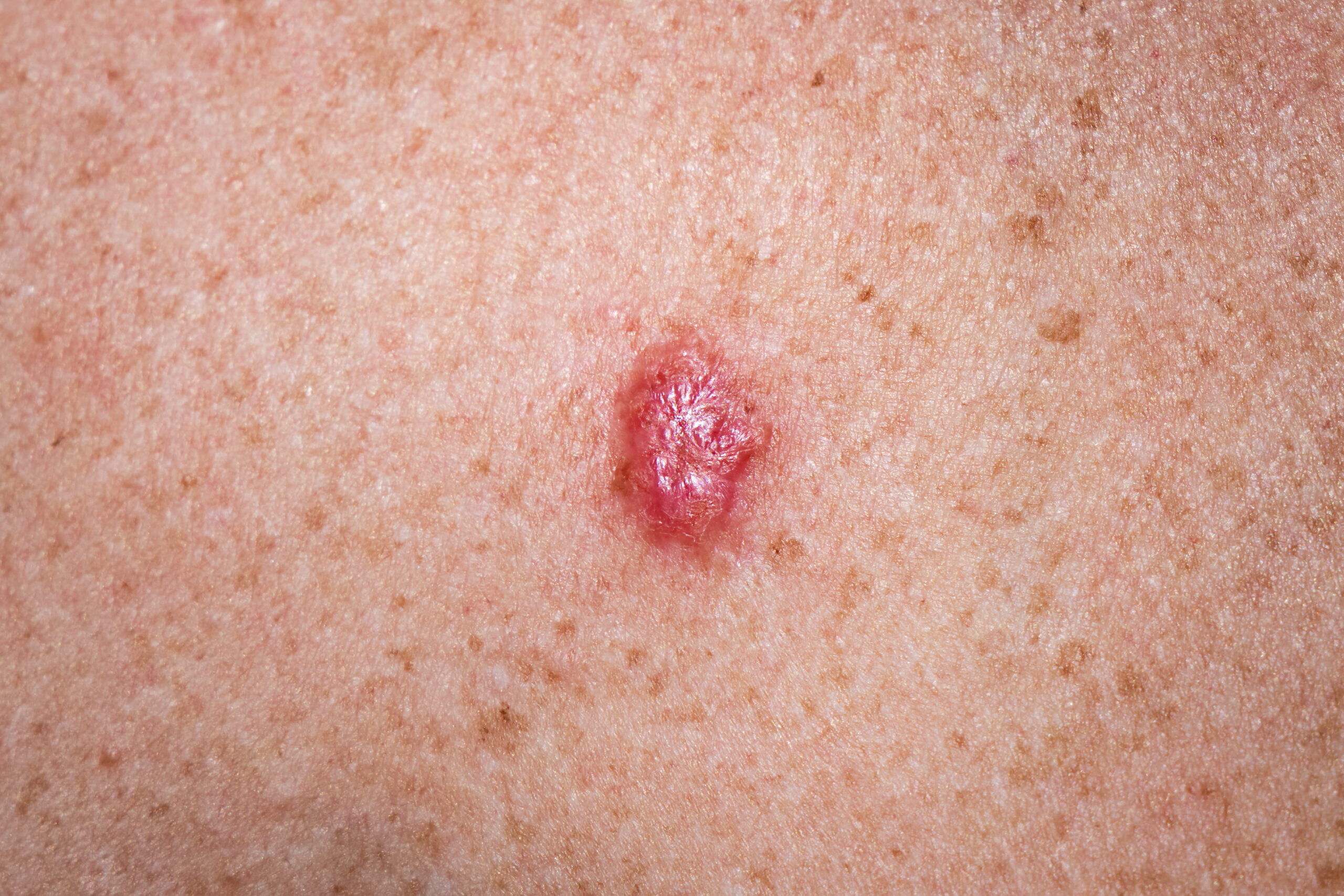
Most look like a small pearly bump with a waxy sheen and fine blood vessels threading across the surface. The presentation varies more than people expect, though, and that variation is where these get missed. Common forms include:
- A shiny pink or skin-colored nodule that never quite finishes healing
- A flat, scaly patch with a slightly raised, rolled border
- An open sore that bleeds, crusts over, heals, then reopens weeks later
- A pale, waxy area that looks like a scar with no injury behind it
On deeper skin tones these lesions often read as brown or glossy black, which is why they get written off as a stubborn mole for months. Anything that bleeds without being bumped deserves attention regardless of its color.
What Causes This Type of Skin Cancer to Develop?
Cumulative ultraviolet exposure drives most cases. It is years of ordinary sun, not one memorable burn, that damages the DNA inside basal cells until they begin dividing without a stop signal, and tanning beds compress that same timeline into a far shorter span. Knowing how ultraviolet light injures skin cells over time explains why these tumors cluster on the face, ears, scalp, neck, and forearms. Less common contributors include prior radiation therapy to the same site, long-term arsenic exposure, and inherited conditions that interfere with DNA repair.
Who Is Most at Risk for Non-Melanoma Skin Cancer?
Fair skin that burns easily, light eyes, a history of blistering sunburns, and an outdoor life put you at the highest risk. Age matters too, since the damage accumulates quietly for decades: most diagnoses land after 50, though we see them in patients in their thirties with heavy sun histories. Anyone on immunosuppressive medication, including organ transplant recipients, carries elevated risk and belongs on a regular skin cancer screening schedule. And having had one of these tumors already is itself a strong predictor of the next one.
How Is a Suspicious Spot Diagnosed?
With a skin biopsy, usually during the same visit where you first point the spot out. Your provider examines the lesion with a dermatoscope, a handheld lens that reveals vessel patterns invisible to the naked eye. If it looks suspicious, the area is numbed and a small sample is taken by shave or punch technique, which takes a few minutes and leaves a mark about the size of a pencil eraser. Pathology results generally come back within a week, and we call you with them rather than leaving you to find out from a portal notification.
What Treatment Options Are Available?
Treatment depends on the size, depth, and subtype of the tumor and where it sits on the body. Our surgical dermatology options include:
- Surgical excision: the tumor comes out with a margin of healthy tissue and the wound is closed with sutures, which suits most lesions on the trunk and limbs
- Curettage and electrodesiccation: the lesion is scraped away and the base cauterized, repeated in layers, which works well for small superficial tumors in low-risk spots
- Mohs micrographic surgery: tissue is taken one thin layer at a time and checked under a microscope the same day until the margins are clear, sparing the most healthy skin
- Prescription topical therapy: creams such as imiquimod or 5-fluorouracil can clear certain superficial lesions without any cutting at all
Is Mohs Surgery Always Necessary?
No. Most of these tumors are cured without it. Mohs earns its place when a lesion sits somewhere healthy tissue cannot be spared casually, such as the nose, eyelid, ear, or lip, or when a tumor has come back, has poorly defined borders, or shows an aggressive growth pattern under the microscope. For those cases we arrange the referral, send the pathology ahead, and handle your follow-up and future skin checks in our office so you are not stitching the process together yourself.
What Does Recovery and Scarring Look Like?
Most people drive themselves home and are back at desk work the same day, with a bandage and a lifting restriction for about a week. Soreness usually peaks in the first two days and responds to over-the-counter pain relief. Sutures come out in seven to fourteen days depending on location, and the scar keeps softening and fading for six to twelve months after that. Keeping the site covered from the sun and using silicone gel once it has fully closed makes a visible difference in how the final scar settles.
How Much Does Skin Cancer Removal Cost?
Cost depends on which technique is used, how large the lesion is, and how the wound has to be closed, so any single number quoted upfront would be misleading. What matters more for planning is this: because a confirmed carcinoma is a medical diagnosis rather than a cosmetic concern, removal is billed as medical treatment and typically falls under medical benefits instead of aesthetic pricing. Our front office verifies your coverage before the procedure is scheduled and walks you through what you can expect to owe, so nothing lands as a surprise afterward.
Can Basal Cell Carcinoma Come Back or Spread?
It can come back, and it very rarely spreads. After complete removal, recurrence at the original site stays low, though tumors on the face and those with aggressive subtypes carry higher odds and deserve closer watching. The bigger number is the one worth acting on: people who have had one of these tumors face a substantially increased chance of developing another within five years. That is why we put patients on a monitoring schedule after treatment rather than sending them off with a clean margin and a handshake.
Why Choose Halo Skin Institute for Basal Cell Carcinoma Care
Skin cancer care goes wrong when it gets passed between offices. Our model runs the other direction: you see the same provider through the biopsy, the removal, and every check that follows, so nobody is reading your chart from scratch while you sit on the table. Our experienced dermatology PA team practices across medical, surgical, and cosmetic dermatology, which means the person who diagnoses your lesion is also the person who treats it.
- Urgent spots seen the same day, with routine visits typically scheduled inside a week
- One consistent provider from the first biopsy through long-term monitoring
- Diagnosis, removal, and follow-up handled within a single range of dermatology services
- Every option explained plainly, trade-offs included, before you pick one
Book Your Skin Cancer Evaluation with Halo Skin Institute
If a spot has changed, bled, or simply outstayed its welcome, have it looked at instead of watched. We provide basal cell carcinoma treatment in Rocklin, CA and at our Auburn office, Monday through Friday from 8:00 AM to 5:00 PM, with urgent concerns seen the same day. Call us or request an appointment online, and we will get you on the schedule quickly.
Experience the difference of Medical and
Surgical dermatology in Rocklin,
California.
Book a consultation at Halo Skin Institute today.
Call the location nearest you:
Rocklin: 916-938-2531
Auburn: 916-938-2532