
Melasma Treatment in Rocklin and Auburn, CA
Dermatology Offices in Rocklin CA and Auburn CA
Call the Location Near You:
Rocklin: 916-938-2531
Auburn: 916-938-2532
Brown patches that surface across the cheeks, forehead, or upper lip are stubborn by nature, and a fair share of the products marketed at them make things worse. Halo Skin Institute manages melasma and other forms of facial discoloration, building each plan around what is actually driving your pigment rather than handing you a routine off the shelf.
Call the location nearest you:
Rocklin: 916-938-2531
Auburn: 916-938-2532
Melasma Treatment
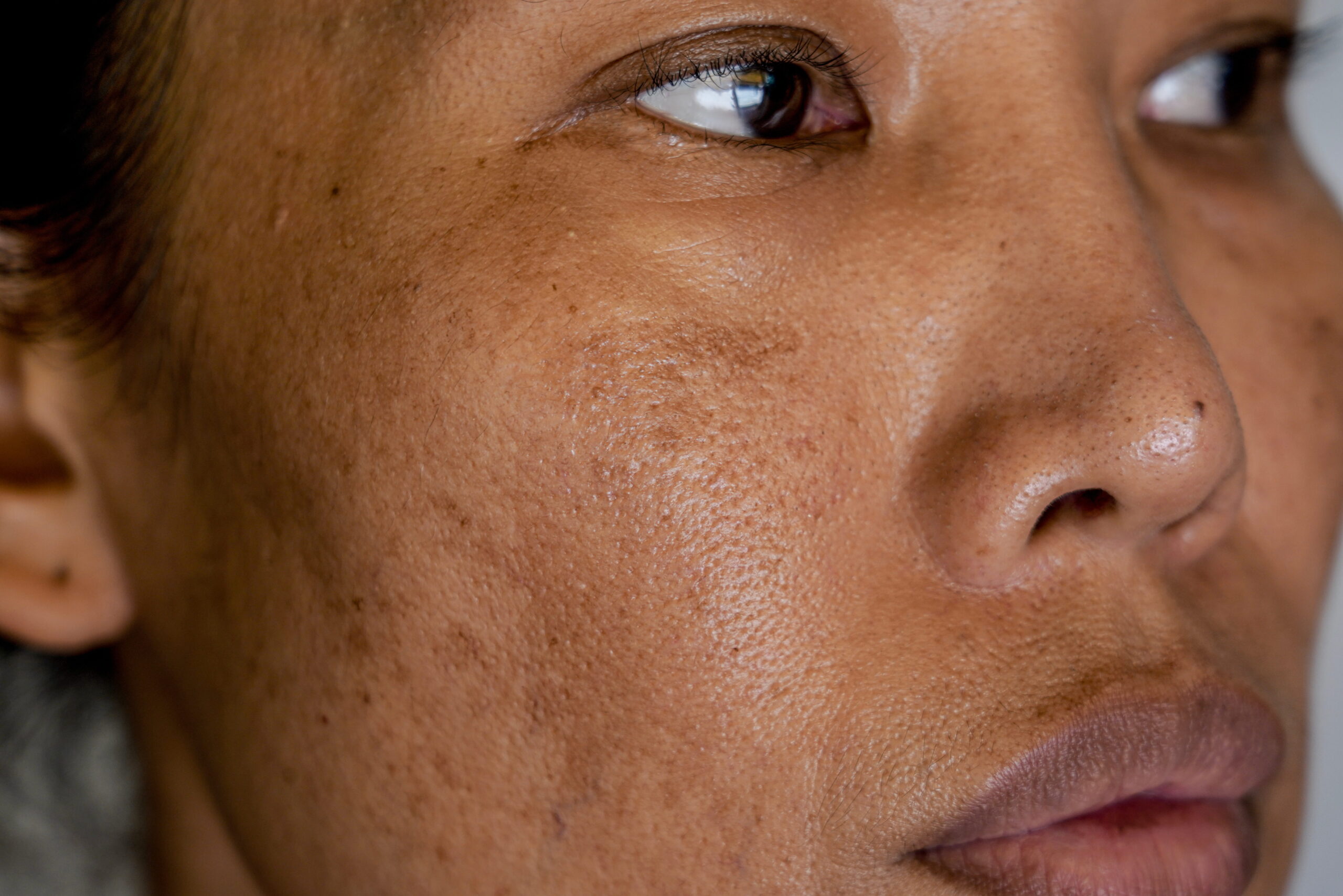
What Is Melasma?
It is a pigment disorder in which melanocytes, the cells that produce melanin, overproduce in patches across sun-exposed areas of the face. It favors the cheeks, the bridge of the nose, the forehead, the upper lip, and the chin, and it appears far more often in women and in people with medium to deeper skin tones. The patches sit flat against the skin, never raised or scaly, with soft irregular borders that blur into the surrounding skin instead of stopping at a clean line. That symmetry and softness are what separate it from most other pigment problems.
What Causes Brown Patches on the Face?
Three forces work together: light exposure, hormones, and genetics. Rarely does one act alone, which is why treating only one of them tends to disappoint. The usual contributors are:
- Ultraviolet and visible light, including daylight coming through car and office windows
- Hormonal shifts from pregnancy, oral contraceptives, or hormone therapy
- Family history, which shows up in a large share of cases
- Heat on its own, from cooking, hot yoga, or long outdoor days, separate from any UV effect
- Irritating products or procedures that inflame skin and provoke pigment as a response
Knowing what prompts pigment cells to overproduce makes the treatment logic obvious: daily light protection does more of the work here than any cream can do by itself.
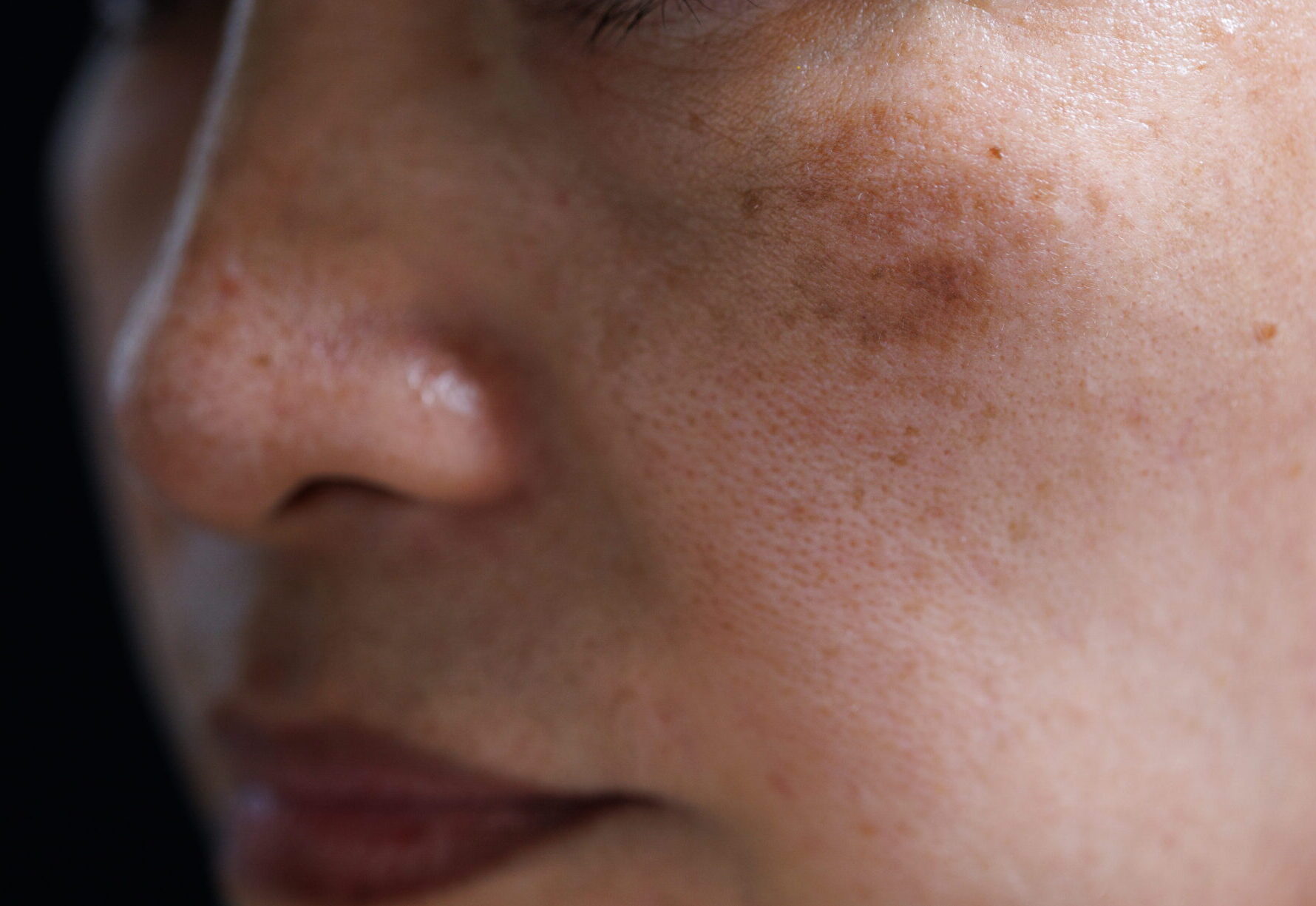
How Is Melasma Different from Sun Spots?
Sun spots are discrete marks with sharp borders; melasma is a diffuse patch with feathered edges. Sun spots accumulate one at a time from decades of cumulative exposure, collect on the hands and forearms as readily as the face, and respond well to targeted treatment without much drama. Pigment patches of this kind arrive symmetrically on both sides of the face, respond to hormones as much as to light, and return when conditions favor them. Telling the two apart at the first visit matters, because a plan that clears one can aggravate the other.
Does Pregnancy Trigger Facial Discoloration?
Frequently, yes. It happens often enough that the condition picked up a nickname, the mask of pregnancy. Rising estrogen and progesterone stimulate melanocytes directly, and the patches usually surface in the second or third trimester. Some of it fades within a year of delivery once hormones settle, though a meaningful share does not resolve on its own. Treatment during pregnancy and nursing stays conservative by necessity: rigorous sun protection and azelaic acid are the workhorses, while hydroquinone and retinoids wait until afterward.
Can Hyperpigmentation Fade on Its Own?
Sometimes, if the trigger disappears. Pigment that followed a pregnancy or a change in contraception can lighten over months once hormone levels normalize. Established patches are another matter. Left alone, most hold their ground and darken a little more each summer, and the reflex response of scrubbing at them with exfoliants or lightening gadgets adds inflammation, which is itself a pigment trigger. The pattern we see most often is skin that has been treated aggressively for a year and looks worse for the effort.
What Treatments Actually Lighten Melasma?
Prescription topicals paired with disciplined light protection do the real work. The standard toolkit includes:
- Hydroquinone, the most studied lightening agent, used in defined cycles rather than continuously
- Tretinoin and related retinoids to speed cell turnover and help other agents penetrate
- Azelaic acid, gentle enough for pregnancy and well suited to long-term maintenance
- A short combined course including a topical corticosteroid to quiet the inflammation feeding the pigment
- Tinted mineral sunscreen containing iron oxide, which blocks the visible light that ordinary filters let through
Our medical dermatology approach sequences these deliberately instead of stacking them, because pushing hard on already irritated skin reliably backfires and sets progress back by months.
How Long Does It Take to See Results?
Expect the first visible change at roughly eight to twelve weeks, with meaningful clearing somewhere between four and six months. The timeline depends heavily on how deep the pigment sits. Patches held in the upper layer of skin lighten comparatively quickly, while pigment that has settled deeper responds slowly and incompletely no matter what is applied to it. We photograph the same areas in the same light at each visit, because change this gradual is nearly impossible to judge in a bathroom mirror and people abandon working plans for no reason.
What Daily Habits Keep Pigment from Returning?
Daily light protection is the habit that decides whether your results hold, and it is not optional on overcast days or indoors near windows. A broad-spectrum SPF 30 or higher with iron oxide, reapplied every two hours outside, does more than any product you apply at night. A wide-brimmed hat handles what sunscreen misses. Beyond that, keep skincare boring: no scrubs, no strong fragrance, no stacking of actives that leave skin pink. If hormonal contraception lined up with the onset of your patches, that is worth a conversation with whoever prescribes it.
What Does Pigmentation Treatment Cost?
The cost centers on the office visit plus your prescriptions, since this is managed medically rather than through a package of procedures. Compounded formulations and brand retinoids carry the widest pharmacy price range, and generic options exist for most of them. Coverage varies more here than with other skin conditions, because some plans classify pigment care as cosmetic even when it is diagnosed as a medical condition. Our front office checks your benefits ahead of the visit and tells you plainly what will be covered and what will not.
Will Dark Patches Come Back After Treatment?
They can, and for many people they do, particularly through the summer. This is a condition that gets managed rather than cured, which is worth hearing at the start instead of discovering it a year in. Most patients move from an active clearing phase onto lower-frequency maintenance therapy, which holds the ground they gained. A flare after a sunny vacation is not a failed treatment, it is the condition behaving exactly as expected, and the response is to resume the plan rather than escalate it.
Why Choose Halo Skin Institute for Melasma Care
Pigment conditions punish inconsistency more than almost anything else in dermatology, and inconsistency usually comes from seeing a different face at every appointment. You work with the same provider here across the whole arc of treatment, which means the person adjusting your regimen at month four is the one who chose it at month one. Our experienced dermatology PA team explains every option and the reasoning behind it, so you are making informed decisions rather than following instructions.
- Routine visits typically scheduled inside a week, with urgent concerns seen the same day
- One consistent provider through clearing and maintenance, not a rotating roster
- Photographic tracking at each visit so progress is measured, not guessed at
- Medical, surgical, and cosmetic care available within one range of dermatology services
Book Your Pigmentation Consultation with Halo Skin Institute
If brown patches have outlasted every serum you have tried, a prescription plan built around your triggers will move faster than another round of guesswork. We offer melasma treatment in Rocklin, CA and at our Auburn office, Monday through Friday from 8:00 AM to 5:00 PM. Call us or request an appointment online and we will get you scheduled.
Experience the difference of Medical and
Surgical dermatology in Rocklin,
California.
Book a consultation at Halo Skin Institute today.
Call the location nearest you:
Rocklin: 916-938-2531
Auburn: 916-938-2532